
Spades Online - Card Game
ZiMADCard
4.61.34K Reviews
- Version
- 3.3.2
- Installs
- 100.00K
- Age Rating
- Everyone 10+
Screenshots





Our Review of Spades Online - Card Game
 Analysis by Appyee
I approached Spades Online - Card Game as the kind of app I could open for a quick hand, then keep playing when the table became interesting. It is a free card game from ZiMAD, built around Spades with online multiplayer and solo play. That combination matters because it lets the game fit two very different moods: a relaxed practice session when I am alone and a more social, competitive match when I want to play with other people.
The first thing I noticed is that this is not trying to be a broad collection of unrelated card games. Its identity is focused. You sit down to play Spades, read the table, make a bid, manage your hand, and try to understand what your partner or opponents are likely holding. That narrow focus is a strength for players who already enjoy the game, although newcomers may need patience before the decisions feel natural.
How a normal session feels from the first hand onward
The most useful way to approach the game is to treat each hand as a small planning exercise rather than a sequence of isolated card plays. I start by looking at the shape of my hand, counting likely tricks, and deciding whether my bid is ambitious or conservative. Once play begins, I keep track of which suits have already been weakened and whether spades are being saved for a late swing.
That basic routine makes solo play more valuable than it may seem. Playing against computer-controlled opponents gives me room to test decisions without the pressure of a live table. I can try a risky bid, see how quickly a weak suit becomes a problem, and learn the consequences of spending high spades too early. It is a practical training loop, especially for someone who understands the rules but still makes inconsistent choices.
Online play changes the rhythm. A live table makes every delay and every unexpected card more noticeable, and the social element gives familiar hands more tension. I would choose multiplayer when I want a genuine contest, but I would not use it as my first learning environment if I were completely new to Spades. Solo play is better for learning the flow, while online matches are better for testing whether those lessons survive against human decisions.
A realistic everyday use case is a short break during which I play one or two hands, leave the app, and return later when I have more time. The format suits that kind of irregular session better than a long campaign game. It also works for a quiet evening when I want something more thoughtful than a purely luck-driven card game. The important distinction is that the entertainment comes from judgment: the cards matter, but so does how well I interpret the situation.
New players should pay close attention to bidding. A bid is not simply a prediction of how many tricks I would like to win; it is a commitment that shapes the rest of the hand. I get better results when I separate sure tricks from hopeful ones. A strong-looking hand can still fail if its winners are trapped behind the wrong lead, and a modest hand can sometimes perform well when the table develops favorably.
Another useful habit is to remember the cards that matter, not every card that appears. I watch for the leading high cards in each suit, the spades already played, and signs that an opponent is void in a suit. This is less exhausting than trying to memorize the whole hand history, yet it gives enough information to decide when a suit is safe to lead or when a spade may cut through the table.
Small setup choices that improve the experience
Before settling into online matches, I recommend checking the available settings and presentation choices rather than accepting the first layout automatically. In a card game, readability is not decoration. I want the cards, turn state, and table information to be easy to scan, particularly on a smaller phone screen. A layout that looks attractive but makes suit recognition slower is a poor trade during a close hand.
I also check how the game handles sound and notifications on my device. I prefer a quiet setup when I am playing in public or during a work break, while sound can make a longer session feel more like a table game at home. These are simple adjustments, but they prevent the common annoyance of starting a match and then having to interrupt it to change the phone’s behavior.
The version installed on my device is 3.3.2, and the game supports devices running Android 7.0 or later. That makes it accessible to people using older Android hardware, although the practical experience will still depend on the phone’s screen, responsiveness, and connection quality. I would check those basics before judging the game from a single slow or awkward session.
The age classification is Everyone 10+, which feels appropriate for a competitive card game that is easy to understand but still involves strategic pressure. The free download lowers the barrier to trying it, but the presence of in-app purchases ranging from $0.99 to $249.99 per item means I would review purchase controls before handing the phone to a child or letting someone else use my account. I prefer treating optional spending as something to manage deliberately, not something to discover accidentally.
One setting-related trade-off is the difference between convenience and concentration. If the interface offers quick ways to proceed through a hand, those can make casual sessions smoother, but I would avoid rushing simply to finish faster. In Spades, a few seconds spent checking the remaining spades or reconsidering a lead can be worth more than a faster tap. My best workflow is to use convenience options for routine moments and slow down whenever the bid or suit structure is unclear.
Repeatable patterns that make decisions quicker
Experienced play becomes faster when I use the same mental checklist every time. I begin with the bid, then identify my safest tricks, then ask which suit is most likely to create trouble. After that, I consider whether I want to lead from strength or encourage an opponent to reveal information. This order keeps me from jumping straight to the most attractive card in my hand.
One of the most useful patterns is protecting flexibility. I do not automatically spend a high spade just because it can win the current trick. Sometimes keeping that card gives me control later, when another player has exhausted their options or when I need to stop an opponent from taking an extra trick. The right moment depends on the table, but the principle is consistent: a winning card has value beyond the single trick it captures.
I also avoid treating a short suit as an automatic advantage. Being short can eventually let me cut with spades, but it can first create awkward leads and force me to spend useful cards. I look at the suit’s rank distribution as well as its length. A short suit with no meaningful control may be a liability until the table gives me a chance to use it.
When playing with a partner online, I keep my decisions clear and legal rather than trying to communicate through suspicious patterns or exaggerated delays. The strongest partnership habit is consistency: make sensible bids, follow suit when required, and use ordinary card choices to reveal useful information without turning the match into a guessing game about private signals. That approach is fairer and also easier to repeat.
For solo practice, I deliberately rotate the kind of mistake I am studying. In one session I may focus on underbidding and avoiding penalties; in another, I may test whether I can recognize opportunities to take an extra trick. This is more productive than playing passively and hoping improvement happens on its own. After a hand goes badly, I ask whether the problem was the bid, the timing of a spade, or a failure to track the suits. That diagnosis points to a specific adjustment.
A practical shortcut is to count winners and risks separately. I first mark the tricks that look dependable, then list the cards that might win only if the lead and suit order cooperate. This prevents optimism from quietly turning into an overbid. It also helps when the hand looks weak: sometimes the correct decision is not to chase a dramatic recovery but to limit losses and wait for a better opportunity.
Where the game rewards skill, and where it remains limited
The strongest part of the experience is its focused loop. There is little need to learn a large collection of systems before I can start evaluating my own decisions. The game works well for someone who wants a familiar card format with a choice between solo practice and online competition. Its average rating is 4.6 from around 6.6 thousand ratings, and it has passed 100 thousand installs, which suggests that the format has found a meaningful audience without requiring a huge ecosystem to make sense.
At the same time, the game should not be mistaken for a deep strategy simulator with endless layers of progression. The core challenge comes from playing hands well, not from building a character, collecting a large roster, or unlocking a complex campaign. Players who need constant novelty may find the repeated structure narrow. I see that as a normal trade-off for a specialized card game, but it is important when deciding what kind of entertainment I want.
Online multiplayer is also not automatically better than solo play. Human opponents add unpredictability and social pressure, but they can also make the experience less relaxing. Connection quality, different playing speeds, and the behavior of strangers can affect the mood of a session even when the cards are interesting. When I want a calm practice game, solo is the better choice; when I want the table to feel less predictable, multiplayer earns its place.
The free price is helpful for trying the game, yet I would approach the purchase system with the same care I use in any free-to-play app. A player who only wants occasional hands can likely evaluate the basic experience without committing money. Someone who is tempted by optional items should decide on a personal spending limit first. The broad purchase range makes that planning especially sensible, even if the main appeal remains the card play itself.
Compared with a physical Spades game, this app is more convenient and easier to start when no friends are nearby. It handles the table and gives me an immediate opponent or partner context, while a real deck offers more freedom in house rules and face-to-face conversation. Compared with a generic solitaire app, it demands more prediction and interaction. Compared with a large multiplayer card platform, its narrower focus can be refreshing, but it may feel less varied to someone who wants several games in one place.
I would skip it if I dislike trick-taking games, want a purely offline experience with no interest in online play, or need a constantly changing stream of content. I would also look elsewhere if my priority is a broad card collection rather than a dedicated Spades table. On the other hand, it is a strong fit for a player who already knows the rules, wants quick access to hands, and values the option to move between solo practice and live matches.
My verdict after building a consistent routine
After using the app with a repeatable approach, I found that its value depends less on flashy features and more on whether I enjoy examining decisions one hand at a time. The best sessions are not necessarily the ones with the biggest bids or most dramatic comebacks. They are the sessions where I understand why a hand succeeded, why another failed, and what I should change on the next deal.
My recommended routine is simple: use solo play to learn the table flow, check the phone’s presentation and sound settings before longer sessions, and enter online multiplayer once bidding and suit tracking feel comfortable. During play, separate certain tricks from hopeful ones, preserve flexible spades, and review the cause of a bad result instead of blaming the cards immediately. Those habits make the game feel more deliberate and reduce the frustration of repeating the same mistake.
ZiMAD has made a focused card game rather than an oversized entertainment package. That focus is exactly why I would recommend it to friends who enjoy Spades and want a convenient digital table. I would describe it as a practical choice for thoughtful short sessions, with enough online tension to keep familiar hands interesting, provided the player is comfortable with its repeated core and approaches optional purchases carefully.
For me, the final decision is straightforward. If you want Spades that can move from solo learning to online competition without needing a physical deck or a full group of friends, this is worth trying for free. If you are searching for a broad card-game collection, a story-driven game, or a completely pressure-free pastime, another option may suit you better. For the right player, though, Spades Online - Card Game succeeds because it gives the classic decision-making loop room to breathe.
Verdict
Strengths of Spades Online - Card Game
- Smooth online matchmaking with players from around the world.
- Multiple game modes suit different Spades rule preferences.
- Clear card visuals make suits and bids easy to follow.
- Quick rounds work well for short gaming sessions.
- Progress tracking encourages regular play and improvement.
Limitations of Spades Online - Card Game
- An internet connection is required for online matches.
- Match quality can vary depending on opponents’ experience.
- Ads may interrupt play or appear between completed rounds.
- Some features or customization options may require purchases.
- Occasional matchmaking delays can occur during quieter hours.
Other Releases by ZiMAD
View All
Domino - Dominos online game
Board4.5

Magic Diamond Painting-Gem Art
Art & Design4.7
Similar Picks in This Category
View All
Solitaire - Classic Card Games
MobilityWare4.6

UNO!™
Mattel163 Limited4.3

Spider Solitaire: Card Games
MobilityWare4.6

Solitaire.com - Classic Cards
Tripledot Studios Limited4.7

Plants vs. Zombies™ Heroes
ELECTRONIC ARTS4.1

Hearthstone
Blizzard Entertainment, Inc.4.1
Frequently Asked Questions
What is Spades Online - Card Game?
Spades Online - Card Game is a digital version of the classic trick-taking card game for mobile devices. It usually lets you play with computer opponents or compete against other players online. The main objective is to predict how many tricks your team will win, then play strategically to meet that bid. Rules, scoring, game modes, and available features may vary depending on the version you download.
Can I play Spades Online - Card Game without an internet connection?
Many versions include an offline mode with computer-controlled opponents, which is useful when you are traveling or do not have reliable access to Wi-Fi or mobile data. However, online multiplayer, leaderboards, daily challenges, account synchronization, and some advertisements may require an active connection. Check the app description and test the game after installation, since offline features can differ between Android and iOS releases.
Is Spades Online - Card Game suitable for beginners?
Yes, the game can be suitable for beginners, especially if it provides tutorials, practice tables, adjustable difficulty levels, or explanations of bidding and scoring. New players should understand that Spades is not only about playing high cards; predicting tricks and coordinating with a partner are equally important. Starting with easy computer opponents is a good way to learn before joining competitive online matches.
Does Spades Online - Card Game support multiplayer matches?
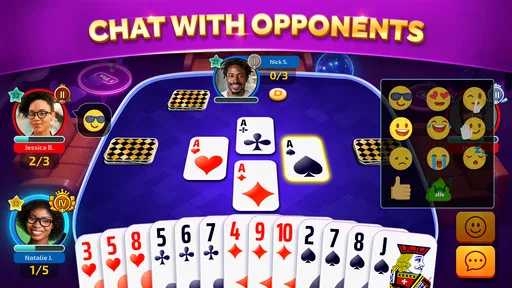
Online multiplayer is one of the main attractions of a Spades app, but the available options depend on the specific version. Some editions offer real-time matches against random players, private rooms with friends, team play, rankings, or chat features. Before downloading, review the current store listing for details about matchmaking, account requirements, regional availability, and whether multiplayer is free or connected to in-app purchases.
Is Spades Online - Card Game free to download and play?
The app may be free to download, but free access does not always mean that every feature is unrestricted. Many card games display advertisements, offer optional purchases for coins or cosmetic items, or provide subscriptions that remove ads and unlock additional content. Review the pricing information shown in Google Play or the App Store, and check the privacy and permissions sections before installing.
Play our best games!


